 Casstiel blurted out: Divine grace is a theological term present in many religions.
Showing posts with label Religion and Christianity. Show all posts
Showing posts with label Religion and Christianity. Show all posts
Friday, August 1, 2014


Monday, July 21, 2014
Consecrated life


Sunday, July 20, 2014
what is a Deacon?

The word "deacon" is derived from the Greek word diákonos, which is a standard ancient Greek word meaning "servant", "waiting-man", "minister", or "messenger". One commonly promulgated speculation as to its etymology is that it literally means "through the dust", referring to the dust raised by the busy servant or messenger.
Saturday, July 19, 2014
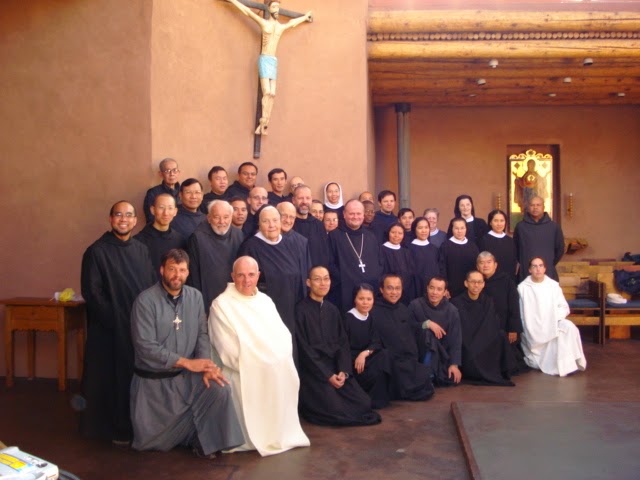
Religious Order

The order is composed of initiates (laity) and, in some traditions, ordained clergy. Religious orders exist in many of the world's religions.
Friday, July 18, 2014
Religious' habit

Thursday, July 17, 2014
Religious profession
Tuesday, July 15, 2014
Can monks in Solemn Vows enter marriage?
Monday, July 14, 2014
Cloistered Religious
Sunday, July 13, 2014
exclaustration

Friday, July 4, 2014
Lutheranism
Alberto blurts out:Lutheranism is a major branch of Western Christianity that identifies with the teachings of the sixteenth-century German reformer Martin Luther.
Luther's efforts to reestablish the theology and practice of the Roman Catholic Church and Carlstadt's Reform movement, launched the Protestant Reformation and, though it was not Luther's original intention, left Western Christianity divided.
Augsburg Confession of 1530 established the Lutheran Church; while the 19th Ecumenical Council of Trent of 1543 officially chartered the Roman Catholic Church through the Roman Catholic Counter-Reformation.
Prior to 1543, Catholics belonged to the old Western Catholic Church from which Martin Luther was an ordained Augustinian monk.
The split between Lutherans and Roman Catholics arose mainly over the doctrine of justification before God. Specifically, Lutheranism advocates a doctrine of justification "by grace alone through faith alone because of Christ alone," distinct from the Roman Catholic view of works in addition to faith.
Lutheranism is also distinct from the Reformed Churches, another major church which arose during the Reformation.
Unlike the Reformed Churches, Lutherans have retained many of the sacramental understandings and liturgical practices of the "Old Catholics".
Lutheran theology differs considerably from Reformed theology in its understanding of divine grace, predestination, baptism, sacraments of the altar and to eternity after death.
Today, millions belong to Lutheran churches worldwide; furthermore, the world's 400 million Protestant Christians can trace their tradition, at least in part, back to Luther's reforming work.

Subscribe to:
Posts (Atom)
